"sponsored links"

Powered by WebRing.
Google
 

Thursday, November 30, 2006

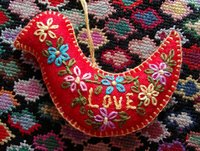
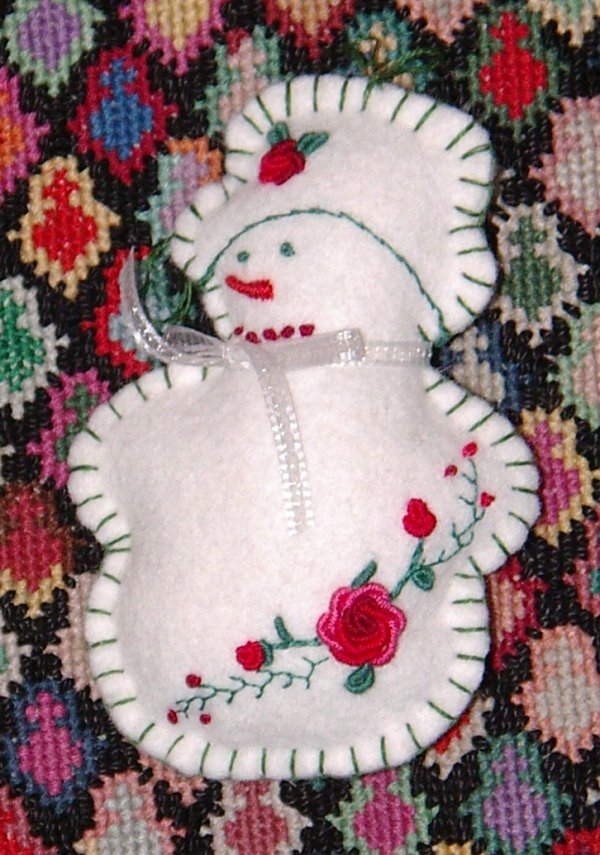
Updated:The Mrs. Snowman felt ornament


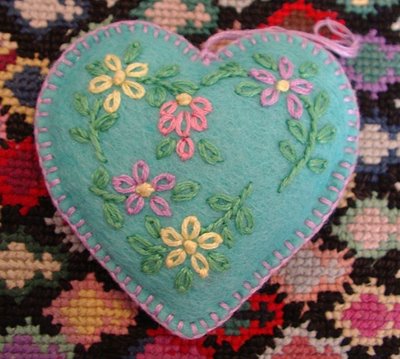
During my meetings yesterday I was embroidering some of the ornaments from the tutorial I did last Saturday.

I was working on the other ten little snow people. My middle daughter thinks these look like girls and the others look like boys.

There is only one ornament that has made it all the way to the completed stage. I was working with two main color themes: white, reds, and greens, sort of a Christmas one; the other is white, blues, and greens, sort of a wintry idea.
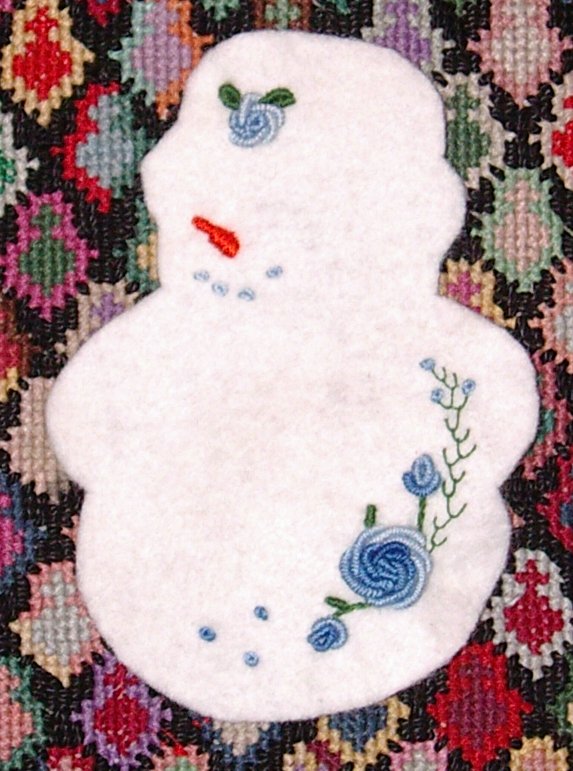
Let me know which color scheme you like better thus far or which seems to be working better. I know I haven't finished them, but the idea is there.

Update: I finished the rest of the troop today.

They actually have embroidery on the back too. Since these are for the ornament swap at cake and pie I thought I would leave that part hidden so there is some sort of surprise. These will all be mailed off tomorrow to their respective homes. I just hope the one on the UK and the one in Australia make it in time.

Wednesday, November 29, 2006

Smocking

This is a piece of a bodice I am working on for a child's dress.
The bodice is smocked and has bullion embroidery, too. The skirt has bullion roses all over it.

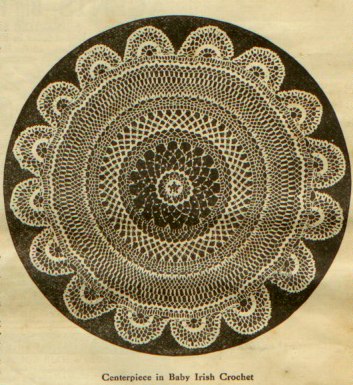
Centerpiece Pattern in Baby Irish Crochet from 1912

This pattern is from needlecraft November 1912 page 30.
This pattern was originally drafted by Mrs. E. W. Walker. I am not changing it from the original text so if it looks funny it is the way patterns were written about 100 years ago.

Make a chain of 8 stitches, join.
  1. (Chain 6, fasten with 1 double in ring) 5 times.
  2. A single under 5 chain, chain 3 fro a treble, 5 trebles under same chain, (chain 3, 6 trebles in next loop) 4 times, chain 3 and join to top of 3 chain.
  3. Chain 3, a treble in each treble and 3 under 3 chain all around, join.
  4. Chain 4, miss 3 trebles and fasten between next 2; repeat around, joining last chain where 1st started.
  5. Slip-stitch to center of 4 chain, * chain 6, fasten under next 4 chain; repeat.
  6. Slip-stitch to center of 6 chain, * chain 6, fasten under next 6 chain: repeat.
  7. Under each loop of 6 chain make 1 double, 7 trebles and 1 double. This row completes a wheel which serves as a very pretty medallion for shirtwaists, combined with embroidery, or it may be used in a variety of ways for which such a wheel is suitable.
  8. slip-stitch to center of 1st scallop, * (chain 9, fasten back in 6th stitch from needle to form a picot) twice, chain 3, fasten in center of next scallop; repeat from * around
  9. Slip-stitch to center of 1st picoted chain, * (chain 9 picot) twice, chain 3, fasten in top of loop between next 2 picot; repeat around, joining last chain where 1st started.
  10. Slip-stitch to center of 1st loop, * (chain 9, picot) 3 times, chain 3 fasten in center of next loop; repeat around, joining where 1st chain started.
  11. slip-stitch to 2d picot ( or, if preferred, the thread may be fastened off and joined in at the place designated), chain 4 a double treble in same picot, keeping top loops of each on hook and working off together, chain 3, 2 double trebles,worked off together, in same picot, * chain 12, 2 double trebles in picot at top of next loop, chain 3, 2 double trebles in same picot, always working the groups of double trebles off together, repeat from * around, chain 12 join to top of 1st group.
  12. NOTE from Sunshine: I do not know if there is a row 12 or if the numbering was off as all the pattern was intact no rips or any thing. It just went from 11 to 13 with no 12. So I hope the pattern works, it looks to be all there.
  13. Chain 5, * miss1, a treble in next stitch, chain 2; repeat from * around and join to 3d of 5 chain.
  14. Chain 7, miss 1 space, fasten in next; repeat.
  15. Slip-stitch to center of chain, * chain 7, fasten under next chain;repeat around.
  16. same as 15
  17. Under each loop of 7 chain make 1 double, 9 trebles and 1 double. This row completes a very pretty doily.
  18. Slip-stitch to center of 1st scallop,* chain 4, a double treble in same place, working off together, a double treble in top of next scallop, chain 4, fasten in same place; repeat from* around, ending with a double treble in stitch where the row started, chain 4, fasten in same.
  19. Slip-stitch to top of cluster, * chain 5, a triple treble in same place, a triple treble in center of next cluster, chain 5, fasten in same place; repeat, ending with a triple treble and 5 chain to complete the row.
  20. same as 19th row.
  21. slip-stitch to top of 1st cluster, chain 4, a double treble in same place, chain 3, 2 double trebles in same place, working off together, * chain 4, 2 double trebles, as described, in top of next cluster, chain 3, 2 double trebles in same place; repeat from *, joining last 4 chain tot op of 1st cluster.
  22. Chain 5, * a treble under 3 chain, chain 2, a treble in 1st of 4 chain, chain 2, a treble in last of 4 chain, chain 2, repeat from * around, joining last 2 chain to 3d of 5 chain.
  23. A single under 2 chain, chain 7, a treble under same chain, * miss 1 space, 1 treble in next chain 4, a treble in same space; repeat from * around, join to 3d of 7 chain.
  24. A single under 4 chain, chain 8, a treble under same chain, 1 treble, chain 5 and 1 treble under next chain, repeat around, joining to 3d of 8 chain.
  25. Slip -stitch to center of 5 chain* chain 7, fasten under next 5 chain; repeat around.
  26. Slip-stitch under 7 chain, chain 5 for a triple treble, a triple treble under same chain, (chain 4, 2 triple trebles under same chain, working off together) twice, * 3 groups of triple trebles under next 7 chain, with 4 chain between each 2 groups, repeat from * around and join to top of 1st group of cluster.
  27. Slip-stitch to center of 1st chain, *chain 5, fasten under next chain; repeat around.
  28. Same as 27th row.
  29. Same as 27th row.
  30. Slip- stitch to center of 1st chain, chain 5 for triple, a triple in same place, * chain 4, 2 triple trebles under next chain, working off together, repeat from* around, chain 4 join to top of 1st cluster.
  31. Same as 30th row
  32. Slip-stitch to center of 1st chain, * chain 5, fasten under next chain; repeat around.
  33. Slip-stitch to center of 1st chain, *chain 6, fasten in next chain; repeat around.
  34. Under each loop of chain make 1 double, 8 trebles and 1 double.
  35. Slip-stitch to center of scallop, * chain 5, fasten in center of next scallop; repeat.
  36. Chain 5, * a treble in 3d of 5 chain, chain 2, a treble in double, over top of scallop, chain 2, repeat from * around, join to 3d of 5 chain.
  37. A single in space, * chain 12, miss 2 spaces, fasten in next, chain3, fasten in next space, turn; ( chain 5, a double treble under 12 chain) 5 times, chain 5, a treble under same chain, chain 2, fasten in space back of where the 12 chain started, chain3 fasten back in next, turn; a treble under 2 chain, 6 trebles under each 5 chain, fasten in next but 1 space forward, turn; chain 6 miss 3 trebles, fasten between next 2; repeat around scallop, turn; chain 7 fasten under 6 chain,repeat around scallop, catching in 2d space forward after fastening the last chain, turn; chain 7 fasten under 7 chain, repeat around scallop, fastening in 2d space back, turn; chain 3, fasten in next space, * 2 double trebles under 7 chain, 2 picots ( that is, chain 5, fasten in 1st stitch of 5 chain) twice, 2 double trebles under same chain, picot, repeat from* around scallop, miss 2 spaces after making last 2 double trebles, fasten in next, then slip-stitch along over 8 spaces, again chain 12, and repeat the scallop.
Made in No. 90 linen thread, this gives a centerpiece about 15 inches in diameter, if worked rather closely. Coarser thread would, of course, result in a much larger piece, and there is such a difference in methods of working that it is quiet impossible to state the exact size of an article, even though the same number of thread is used by two workers. It must be understood, too, that if one does her work tightly more chain-stitches are required than if loosely done. These variations every experienced crocheter understands and makes allowances for.

Except for the red part above typed as written in 1912.

Tuesday, November 28, 2006

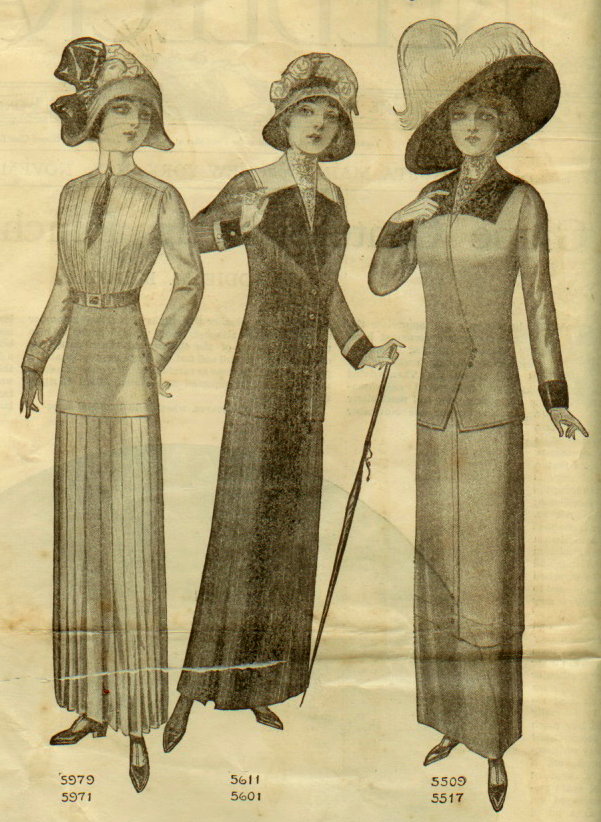
Showing the Latest style Touches


This is from the November 1912 edition of the Needlecraft magazine.

These were sewing patterns you could buy and make for yourself. WOW!!!!! How long would it take to make those ensembles? Look at these outfits they are so precious. I wish woman still wore hats like this. I think they are un-practical but oh, so lovely. Even the dresses are "to die for" as the saying goes. You can just see people taking their daily strolls down tree lined streets in these clothes. I don't think I could live like that on a daily basis, but it would be fun to dress that way for a day or two.

Monday, November 27, 2006

Russian Needle Punch Nut Cracker

We have progress on my seven-year-old daughter's art project.
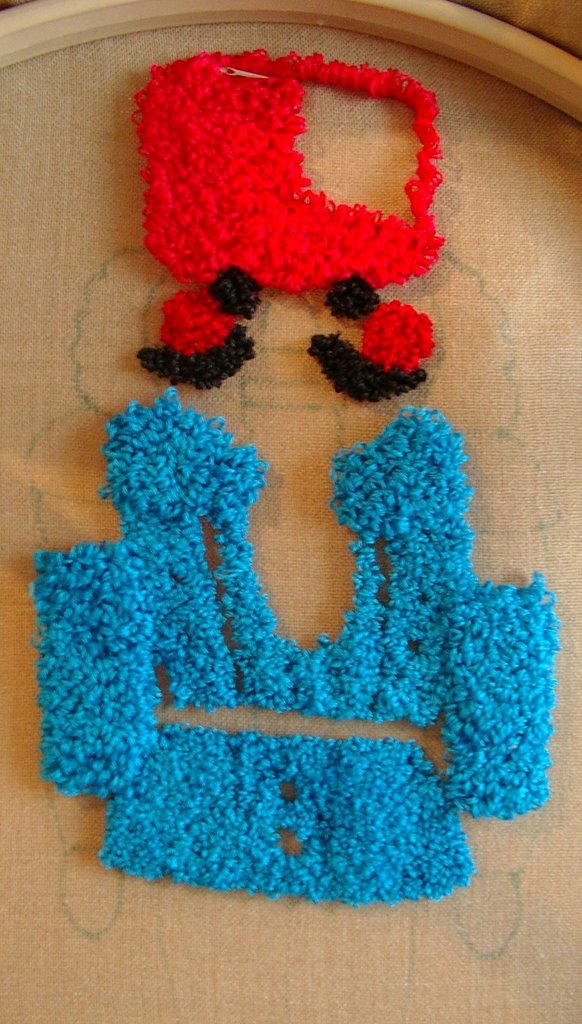
I think she is doing pretty well and getting a lot done. To see what she has done so far go here. Front on right side of text back on left side. If you look closely at the pictures, you will see the needle is left in the work when my daughter is not working on it. The gold-looking tool top left in left photo.

thumpity thump thump thumpity thump thump...

A small army of snow men are invading my house. These are the first ten out of twenty snowmen I am making today. These are still only half made.
Update: done and in the mail to my swap mates at MJF

Saturday, November 25, 2006

how to make an embroidered felt ornament

This is good for any holiday or can be used as a gift tag for weddings, baby showers, and birthdays etc...supplies

  1. felt
  2. cookie cutters in desired shapes
  3. embroidery needles
  4. embroidery floss
  5. scissors for both paper and fabric
  6. permanent marker fine tip or pencil
  7. stuffing
  8. 1 safety pin
  9. a piece of paper
How to make
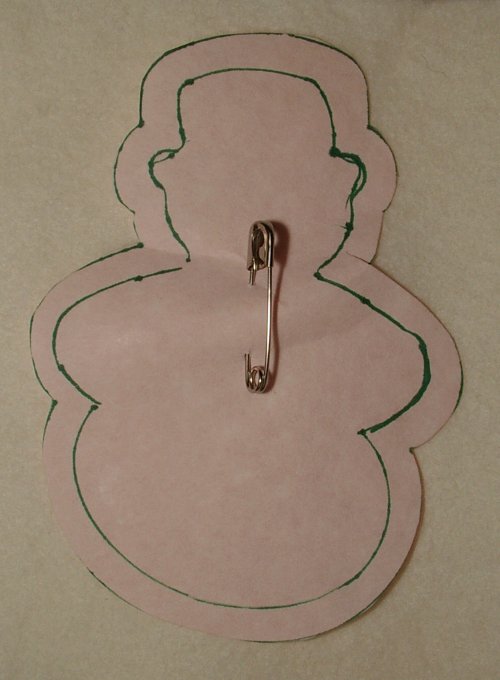
  1. Trace cookie cutter on paper to make template. Trace the inside and out side to see which you like better.
  2. Cut out the line that you like best for template.
  3. Pin template to fabric; this way you are sure not to leave ink marks on fabric.
  4. Cut two pieces of fabric per ornament
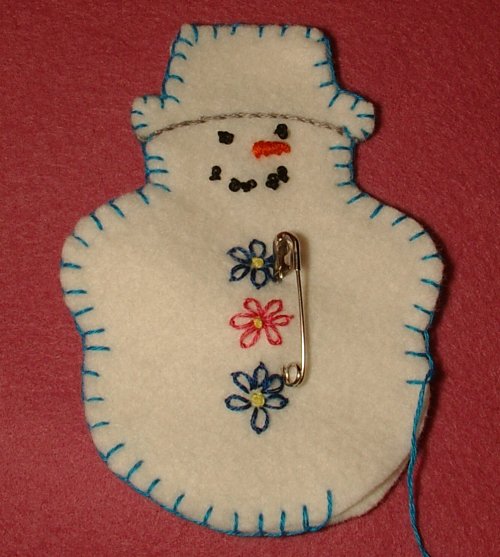
  5. Embroider both pieces of fabric. Use two or three strands of embroidery floss. See picture under #7.
  6. Put wrong sides together place one safety pin in middle to hold while sewing. See picture under #7.
  7. Use a blanket stitch to stitch edges together, stop about one inch from ending remove safety pin and stuff ornament. Finish closing.
  8. Finish with a piece of embroidery floss as a hanger.
I have made a few others since this tutorial.


If you make your own I would like to see them. If you make some send me a link and I will look at them if we get enough I will start a flicker group.

Update:
I have opened a flicker group to post them all please feel free to join.

Felt Ornaments:
This group is about the fun of making and sharing felt ornaments and other felt items.
Felt ornaments. Get yours at bighugelabs.com/flickr

Please look on the side bar there are many more holiday tutorials listed there.

Friday, November 24, 2006

Another wip for Friday November 24

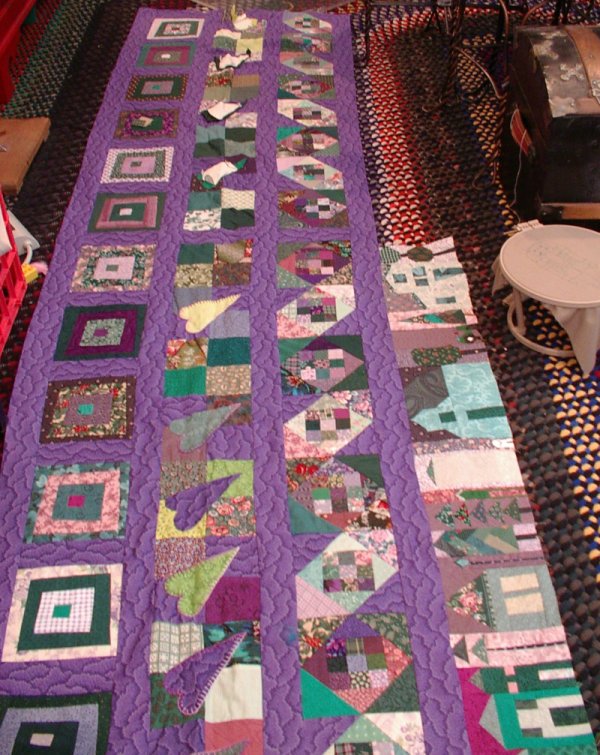
This is a row-of-the-month type of quilt. Each month you are supposed to make a new row for the quilt. the current row is paper pieced houses, trees, and things in a neighborhood. If you look at the pictures closer you will see a small sheep and a tractor, too.When done, this will fit a double-pillow-top king-size bed.

Wip Friday November 24

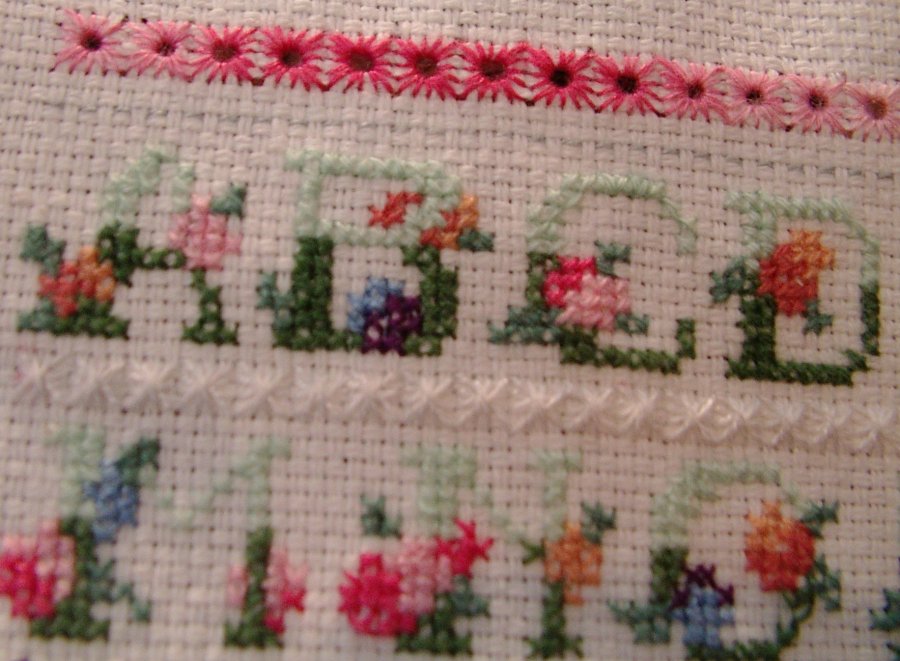
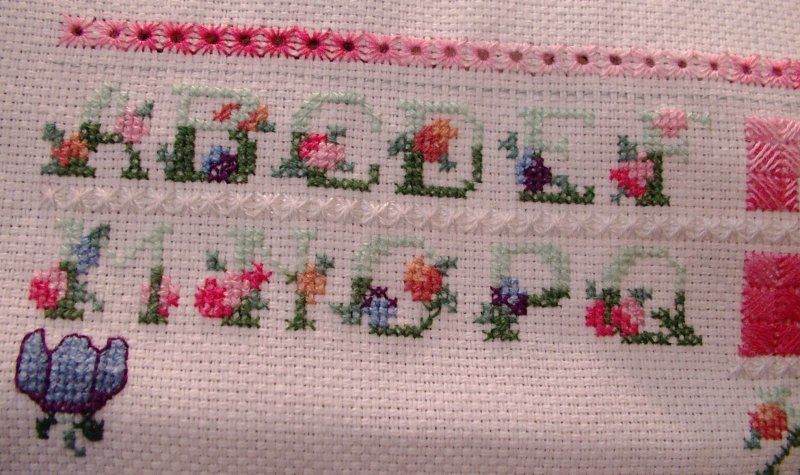
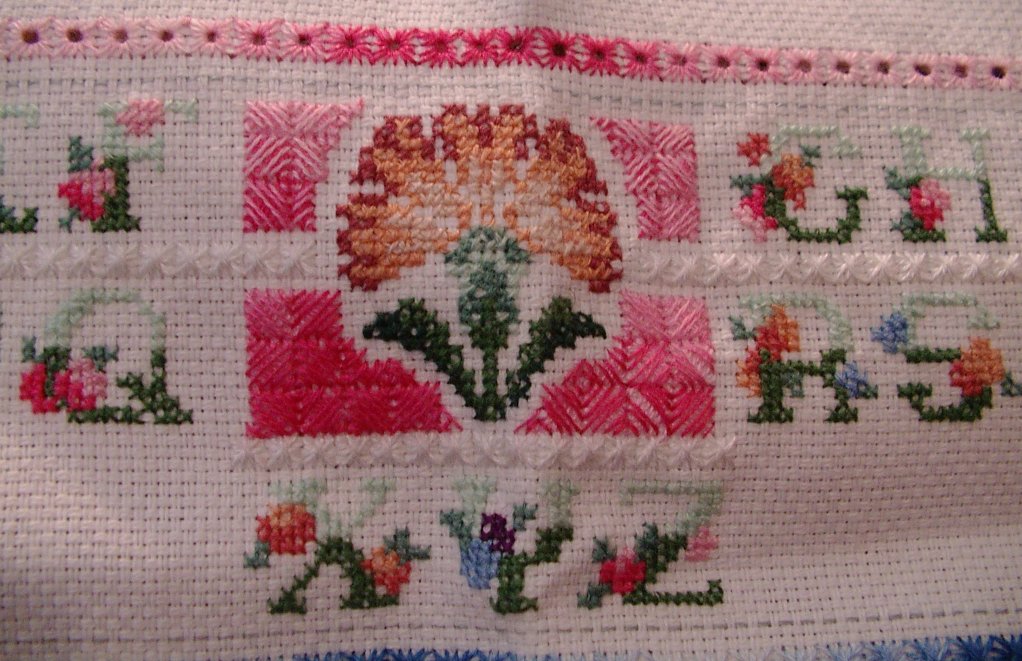
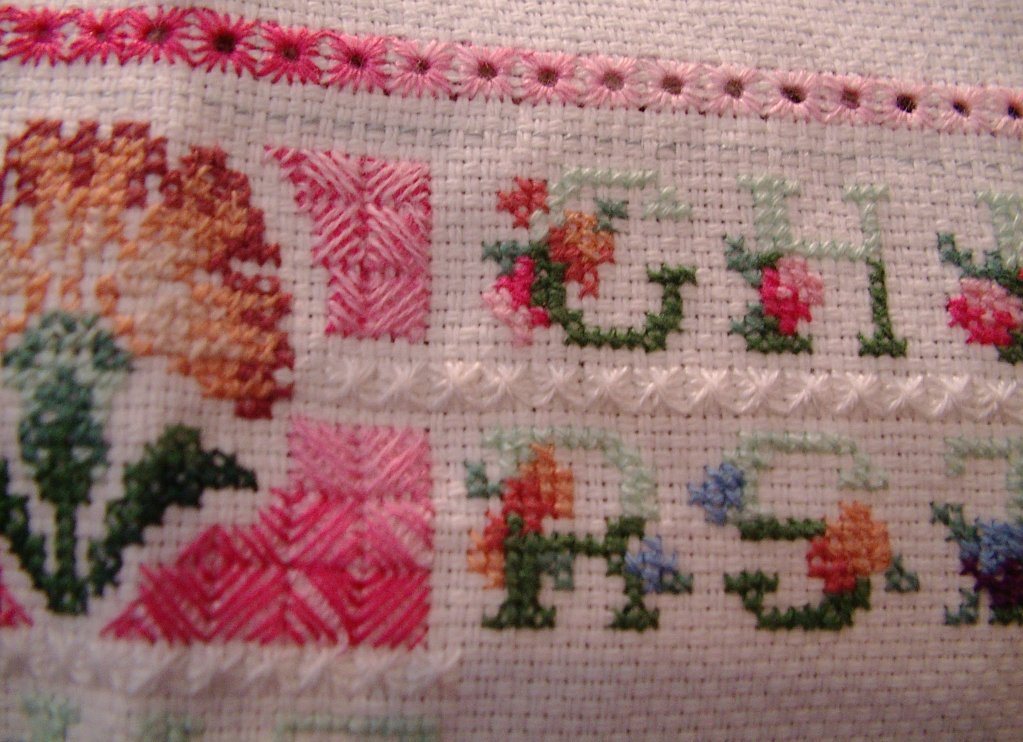
The start of a cross-stitch sampler.

There is no pattern for this that you can buy commercially. As I think of things that I think might look nice, they are added into my work. I have no idea when it will be done. Hopefully in this life time.

Tis the season to make a kissing ball

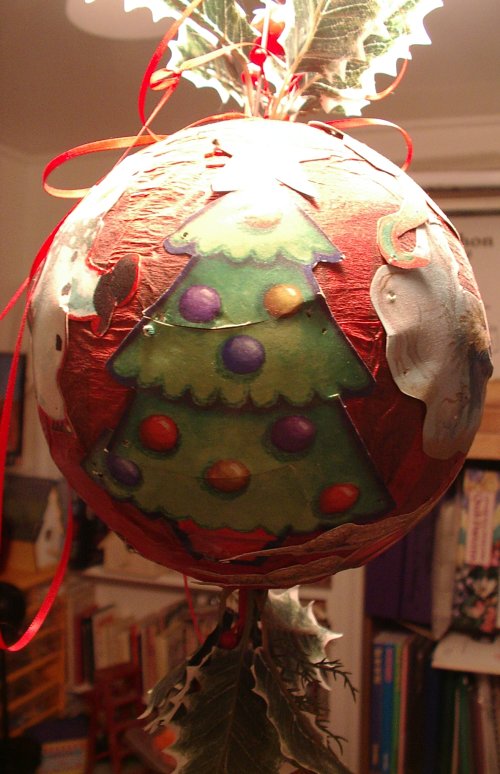
This is a kissing ball; you are supposed to hang mistletoe from it .
My Vavo made these two. We have a lot of them that she has made over the years; they are simple to make. Her way of making them has simplified over the years to what is in these pictures. However, the instructions I am going to post are for the way she made them when I was little, with a paraffin wax coating on them.

Supplies:
  • 1 Styrofoam ball in desired size
  • Tissue paper for desired back group color
  • scissors (to cut tissue and Christmas cards)
  • Old Christmas card lots (cut out the images and words you want to use ) my Vavo calls this making paper dolls
  • white glue
  • Non-rusting straight pins (nickel plated; you can use steel ones but they tend to put rust marks on your piece)
  • 2 paint brushes (ones that you don't care about; one will be used to paint on glue, the other for the paraffin wax)
  • 2 hangers (a piece of metal with a looped end and a pointed end; most craft or hardware stores will have this item)
  • ribbon
  • mistletoe (real or silk; silk lasts longer)
  • Old pot to melt wax or a old double boiler that you don't care about. Vova used a washed out tin can in a water bath. Fill the tin with paraffin wax and melt; if you do this, have pliers to use as a handle for the tin can. Very hot! Be careful; do not spill this on you.
How to make it:

  1. Collect cards and cut them out saving any part of the images or words you want to use on the kissing balls.
  2. Next, use straight pins to lay tissue all around ball and glue in place with paint brush. The pins are only there to hold it in place while gluing. Let dry over night. When the glue is all dry remove the pins. This step can also be done using wall paper paste and wall paper the ball -- sort of decoupage.
  3. Soak pieces of cards in glue to soften and make pliable. Lay images and words on ball; pin in place 'till dry. Let dry over night. Remove pins.
  4. Melt paraffin wax. Paint over entire ball. If you do this over wax paper you will have easy clean up. Form some way of letting this hang to dry. There will be drips in the wax; that is part of the charm. You can also add glitter to the wax while it is hot and paint that on. It adds a little shine to the finished ball. Let ball cool.
  5. After ball is completely cooled and hard, dip hangers in glue insert one at North pole and one at south pole. Let dry over night.
  6. Tie ribbons in North pole and south pole with lots of loops through eye of hanger.
  7. Poke through layer and insert mistletoe or holly at top of ball at north pole and do the same to the south pole.
Hang and enjoy -- let the kissing begin!
Just an FYI the balls pictured were made by my Vavo and are past Christmas gifts to me and my family.

Russian Needle punch table top stand

This is the hoop my daughter is using for her Russian needle punch.

This is known as a table top hoop. It is actually two hoops in one, depending how big your work is. One hoop forms the base for the other and visa verse. She is punching this even as I type. I will take photos later to show her progress.


Update
She is working on it.
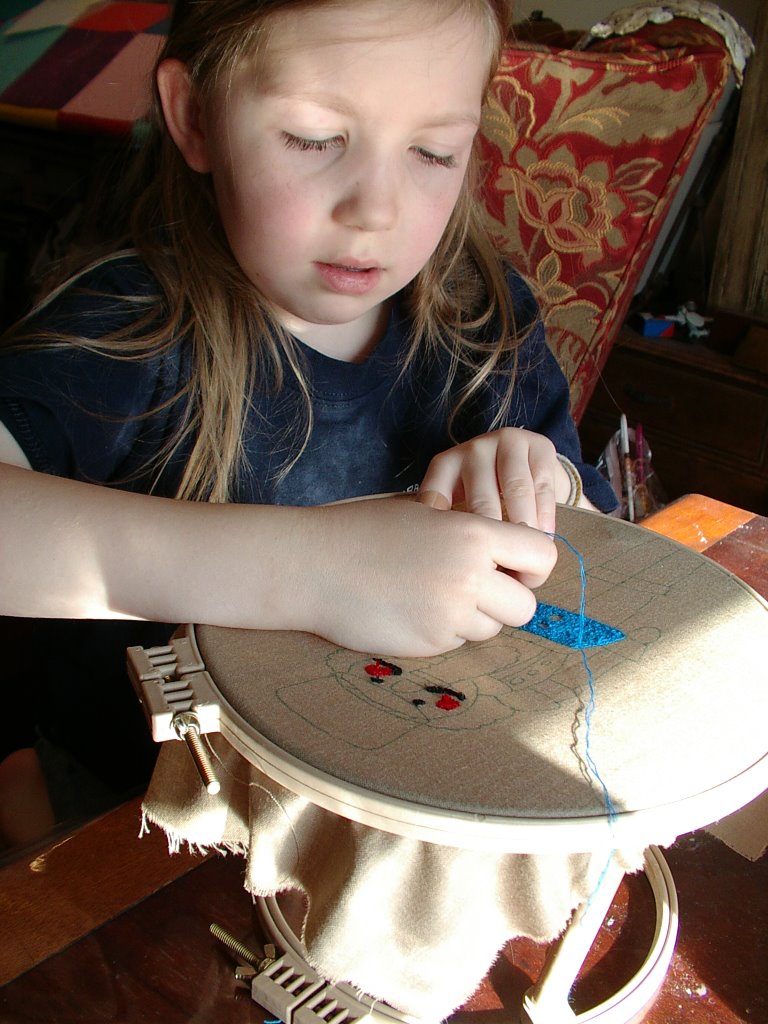
Look at the concentration on that face! I am not even sure she knew I was there till I took the photo. She is actually getting a lot done on it today. The bandages on her hand are from playing, not working on the embroidery. When working on Russian Needle punch you actually work from the wrong side of the piece. So in these photos you are actually seeing the back side of the piece. It looks different on the front; you just have to know what you will get in the end if you do sculpting.

Thursday, November 23, 2006

Nut Cracker in Russian Needlepunch

My daughter is starting her second project using this technique.

This will be for an art show at school in about a month. The last one she did won the last art contest she entered. The current project is for an un-jurored show, so it doesn't all have to be her own original designs. She won't be drafting her own pattern this time.
Since Christmas is around the corner she wanted to do a Nut Cracker. The first three steps of this project are done: fabric picked (wool gabardine), image decided upon, image transferred to fabric using a light table and a green permanent market. The punch work begins tomorrow. I think this time when I am teaching her I will have her play with different fibers, maybe wool for the hair and gold metallic thread for buttons and things like that, but she will have to decide as it is her project. Maybe she will work with playing with depth of the thread loop lengths for added texture. I will just let her see her options in supplies and techniques and she can go from there.
Happy Thanksgiving


For those of us in the United States, it is Thanksgiving today.

A day when family and friends get together an say "Thanks" for all the blessings of the year. It is a common practice to eat turkey on this day. So if you are feeling a little stuffed like this little turkey, I think you ate too much. Have a lovely day!

The item in the back of the picture, in case you are curious, is a salesman tatting sampler c. 1900. A salesman would go to all the local tatters in the area and get samples of their work. Once collected, they (the lace samples) would be attached to fabric and the prices written on it for easy reference. Then the salesman would go from mercantile to mercantile selling his/her wares. After collecting the orders, he would go back to the lacers and tell them what to make. Once items were made the lace pieces would be collected for distribution. There are not too many of these around. The person who had this did not know what it was and gave it to me with the battenburg piano top runner pattern for free. Quite the free bonus. We had it framed; it is quiet lovely.

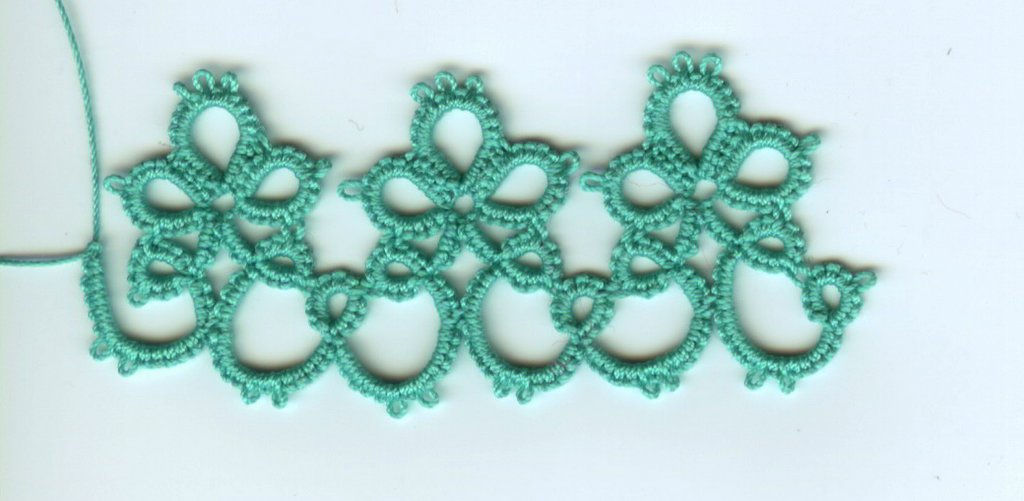
tatted edging

This is an edging that I created over eight years ago.

The sample was made 8 years ago when I was learning how to tat, and it has a few mistakes in it. I think it will still give you the idea of what it looks like. My tension is much better now, and the rings would look more uniform now, as well.

Key
= means future join
- means picot

+ means current join
ds = double stitches
j = join
p= picot
capital letter means ring
lower case letter means chain
the number refer to the number of dc stitches.
Here is a sample I just tatted the aqua one.

Modern Pattern Version
A. 4=4=4
a. 6-2-6=4
B. 4+4=4
b. 4
C. 5+5-5=5
D. 5+5-2-2-5=5
E. 5+5-5=5
c. 4
F. 4+4=4
d. 4+6-2-6
repeat to desired length
for easier reading, if you are not used to the method above, use the pattern below

Traditional short hand pattern
*Ring A : 4ds, p, 4 ds, p, 4 ds, close ring
chain a: 6ds, p, 2ds, p, 6 ds, p, 4ds
Ring B: 4 ds, p ( join to last p of last ring), 4ds, p, 4 ds, close ring
chain b: 4ds
Ring C: 5ds, p (join last picot of last ring), 5ds, p, 5ds, p, 5ds, close ring
Ring D: 5 ds, p (join last picot of last ring), 5ds, p, 2ds, p, 2ds, p, 5ds, p, 5ds, close ring
Ring E: 5ds, p (join last picot of last ring), 5ds, p, 5ds, p, 5ds, close ring
chain c: 4ds
Ring F: 4 ds, p ( join to last p of last ring), 4ds, p, 4 ds, close ring
chain d: 4ds, p ( join to last p of last ring), 6ds, p, 2 ds, p, 6ds *
repeat from * to * to desired length

Wednesday, November 22, 2006

Clover Leaf tatted edging from 1917

In the book, Novelty Tatting and Maltese Crochet, Book No. 6 Price 10 cents published in 1917 by Novelty Art Studios Chicago, Illinois, this edging pattern is known as No. 17.

Key
pi = picot
ds = double stitch
clover = in this case a 3 leaf configuration

Do not detach thread from ball. * Make a clover leaf of 3 rings thus: 7 pi separated by 3ds; close to form ring; 3 ds join to last pi of ring; 3 ds; finish ring as before; close ; make 3rd ring same as preceding ones; join in like manner; turn. With ball thread ch ( 3 ds; 1 pi) 4 times; join to 4th pi of center ring; ( 3ds: 1 pi) 4 times; 3 ds. With ball thread ch 4 ds; repeat from*

I did not edit this pattern for modern terms and style. It appears as it would have been written when first published.

Monday, November 20, 2006

Irish Crochet Baby Bonnet Pattern Circa 1900

Irish Rose Baby Bonnet
Size 100 thread & Size 14 hook

Key
ch = chain
dc = double crochet
tr = treble crochet
x = times
p = picot
sp = space
* = start and end of repeat
sl st = slip stitch


thread hook and rose
For Rose:
chain 7, join in a ring.

  • 1st round: Chain 7 ( counts as 1 treble and ch 3, 1 tr in ring ( ch3, 1 tr in ring ), 4 x ch 3, sl st in top of the tr of the 1st ch7.
  • 2nd round: sl st in ch sp ch3 ( counts as dc), 5tr 1dc in same space, one dc, 5 tr, 1 dc under each ch 3 loop around join by sl st in top of ch 3
  • 3rd round: ch 4 ( this is a drop down chain and is ignored at the end of the round), 1 dc in top of tr of round 1 in between the back of petals, * ch 4, 1 dc in top of next tr; repeat from * around ch 4 join with sl st to top of first tr in this round
  • 4th round: sl st in ch sp ch3 ( counts as dc), 7tr 1dc in same space, One dc, 7tr, 1 dc, in each ch 4 loop around join by sl st in top of ch 3
  • 5th round: Ch 5 , 1 dc in top of 1st dc in between back of petals on round 3, * ch 5, 1dc in top of next dc; repeat from* around join with sl st to top of first tr in this round
  • 6th round:sl st in ch sp ch3 ( counts as dc), 9tr 1dc in same space, One dc, 9 tr, 1 dc in each ch 5 loop around join by sl st in top of ch 3
  • cut and finish thread unless you are doing the one rose that starts the center back of the bonnet do not cut thread on that one that should also be the last rose you make

backsideback side
Note : The roses must be joined together in working, leaving two free petals on each side.

  • make a round of 14 roses forming a circle
  • make a row of 15 roses do not form a circle
  • make a round of 24 roses forming a circle
  • make 1 rose and start baby cap assembly do not cut thread of this rose see assembly below
Baby Cap Assembly

For rose see above directions
See picture to right above for joining roses reference

working in rounds

When you have completed the starting rose (center back)after you have joined to the first dc of the last round sl st into the next 3 trc (all joins with blocks and petals are made either on the 3 tr from right or 3trc from the left on all the petals and blocks).
  • round 1: sl st up to 3rd of 9 tr on next petal ( this is just a repeat of above note), * ch6, sl st into 4th ch from the hook to form picot, ch 6, p, ch 3 j petal on 3rd trc on petal (also see photo as there are two joins per petal); repeat from * for a total of 12 times (including first time not ibn the repeats), join to the 1st loop see photo. * Work 1 p loop, **ch 6, 1 dc in next loop, turn,ch 3(= 1 dc) 9 dc over this loop this is counting the first chain 3 as one of the dc, turn, chain 4 (= 1 trc counts as one of your trc) 9 tr in 9 dc ( meaning one in each one), ch 3, 1 dc in same loop with 6 ch, ** make 2 more p loops and repeat from * around make 1 p loop at the end and join w dc. imgp7664 imgp7668imgp7672imgp7674imgp7675
  • round 2: Work another round of p loops; see photosimgp7681from here up has been redrafted I have not reworked below this point yet (this note was added April 10, 2008)
  • round 3: next row make 4 loops, then repeat from ** to **( see round 1) for block, 4 more p loops; repeat block and 4 p loops around. total of six blocks should have been made
  • work another row of p loops
  • Next row work * 6 p loops, repeat from ** to ** for block, then repeat from * 3 times.
  • Work another row of P loops
  • then a row of 14 roses, joining them to preceding row by two petals, and to each other by one petal.
  • Make 2 rows of p loops. This makes the crown.
  • Work back and forth for 6 rows with p loops leaving 7 p loops free.
  • Make a row of 15 roses, see above row of 14 rose for how to join
  • then 9 rows of p loops, making the last 2 rows go entirely around the cap.
  • make a row of 24 roses clear around the cap. This will make 16 around the face and 8 around the bottom

The wording has been changed from the original as the way people wrote patterns 100 years ago differs from today's format and would be confusing to the modern crocheter. With that being said you will still need a little understanding of how Irish crochet works to follow the pattern as it is still assumed you know the techniques involved such as an Irish rose and picots.

Friday, November 17, 2006

Etsy items

Etsy is still having problems with their new version, so the items I would have posted today I am not able to load there.

So, hopefully, I will be able to load next Friday and just do all the items at once. I accept pay pal there now, as well.

Wip Fall needle turn Applique with embroidery

This, as you can see, is a partially-done quilt.

This is also not the final lay out for one -- that yellow leaf at the bottom is facing the wrong way. A few more blocks need to be made as well. The muslin squares are 9 1/2 by 9 1/2 inches and make a finished 9 x 9 inch square. Please use a 1/4 inch seam allowance now and through out. You can actually use any leaf that is native to your area for this or use random leaves to give lots of variety to this quilt.

The three smaller leaves are for a vine boarder that will go around the entire quilt on a 7 1/2 inch wide, unfinished size, muslin boarder. But once again you can use any leaves you want, holly leaves would be good for a Christmas theme and maybe a few pine cones in the boarders.

This is my WIP for today. You can always make it yours, too; it's not a hard pattern. Pin pattern on pieces of fabric you wish to cut, yes you can cut more than one at once they won't be exactly the same and that is better -- more like real leaves. I recommend using scissors to cut, not a rotary cutter, but either would work. Then pin to muslin squares and use a needle to turn applique to attach them. It's a little random that way and each has its own personality, too.

Next, use a chain stitch to make the stem and veins. You can either make the embroidery blend or have a real high contrast. Sew blocks together, add a boarder, add a vine using handmade bias tape, pin small leaves in place. Finish them the same as big leaves. Then set up on quilt frame; quilt with echo quilting and bind. This makes a very lovely fall project. Blow up pictures to your desired size and make templates. Have fun.

Thursday, November 16, 2006

Button, button who's got the button?

So this morning I was looking to put a button in my mother of pearl button boxes.

I sort my buttons by what they are made of like plastic, metal, glass, MOP, shank and holes. It was a big mistake to try and put this one button away. I should have just left it alone all by itself in a random box. In the process of figuring out which box it went in I dumped both. Nothing like 4,000-5,000 buttons that need to be sorted into categories like : shank, four hole, two hole, one hole, colors, and vintage glass and metal. This made it so almost nothing got done for the day. But now I have nice little plastic round containers, grocery store find (actually medicine bottles), to separate the shanks and I am stringing the ones with holes that have a pair the ones that are one of a kind are just sorted by color and amount of holes or shank style. So at least next time it won't be such a mess. I guess it is good that this happened, in a way. I am about two-thirds the way through with straightening them. Almost done. Yeah!!!!!!!

Wednesday, November 15, 2006

She won two awards

If you remember, a little while back my middle daughter learned Russian Needle punch.

She entered it and two other of her works into an art contest. Today we found out that it and her chalk drawing won awards and will go on to the next level. I think it is a pretty good piece considering it is her first attempt and she is only in first grade.

yo-yo time again

I received sixteen yo-yos in the mail today from suzyhomemaker at MJF.


So I got out all the ones that I and the kids had been making and getting as gifts. We sat right down to start adding them onto the table topper. I had a few that there are less than four of and they don't work into four patches, so I got thinking what I could do with the odds and ends. Thus I started to experiment with crochet and yo-yo's. I think it might look real neat in the end and have a very different drape than normal; softer.

We ended up adding one row to three sides and two and one half rows to the other side. I think it will take about four more rows to cover the table when the leaves are open. It is getting a lot closer. Thank you to all who have helped with my kids and me with my project.

Compleating a needlepoint

This morning I received a call from Heindselman's, a yarn and knit shop in Provo, Utah.

They had a customer that had a needle point and peti point piano bench tapestry that needed to be completed. She came right over with it for me to look at. Her dad, yep that is right -- a man, did this. He died before he was able to complete the last filling stitches around all of the center motifs and a tiny bit of peti point; roughly six to ten hours of work left to do. I think closer to ten. She wants it back by February; should be easy to do with that much time, even with all the holidays.

Tuesday, November 14, 2006

Romanian Point Lace Bolero

I am making this Bolero vest on a circa 1880-1900 Battenberg pattern.

This was a common practice for woman around the last turn of the century when a lot of people did hand work. Battenburg patterns were sold in almost all mercantile and big department stores. I have never counted how many patterns I have like this, but there are well over fifty, I am sure: handkerchief, baby bonnets, doilies, runners, parasols, insertions. I have three that are for vest and jackets. I have the vintage tools and supplies to make this in the traditional Battenburg way. I wanted one in Romanian lace instead; for now I can always go back and make another in Battenburg. As you can see I have made the cord. This is not the traditional foundation cord for Romanian lace as it only unravels in one direction. This is usually an accent braid; cord and braid mean the same thing. I just wanted to stay a little true to the Battenberg pattern that had a scalloped tape lace braid, so I made a scalloped Romanian braid instead. I have started the filling stitches. I have taken some close ups of some of the detail of the pattern. The measurement refers to the bust size in Battenberg; it will be a little smaller in Romanian as the threads pull a little tighter when stitched. So it should fit me once that is taken into account. I am also using antiques crochet thread to make this item.

Monday, November 13, 2006

The greatest gift is the hardest to give but what a treasure you get in return

The cheerful little girl with bouncy golden curls was almost five. Waiting with her mother at the checkout stand, she saw them, a circle of glistening white pearls in a pink foil box.

"Oh Mommy please, Mommy. Can I have them? Please, Mommy, please?"

Quickly the mother checked the back of the little foil box and then looked back into the pleading blue eyes of her little girl's upturned face.